Temporary increase in data transfer - Data High Speed
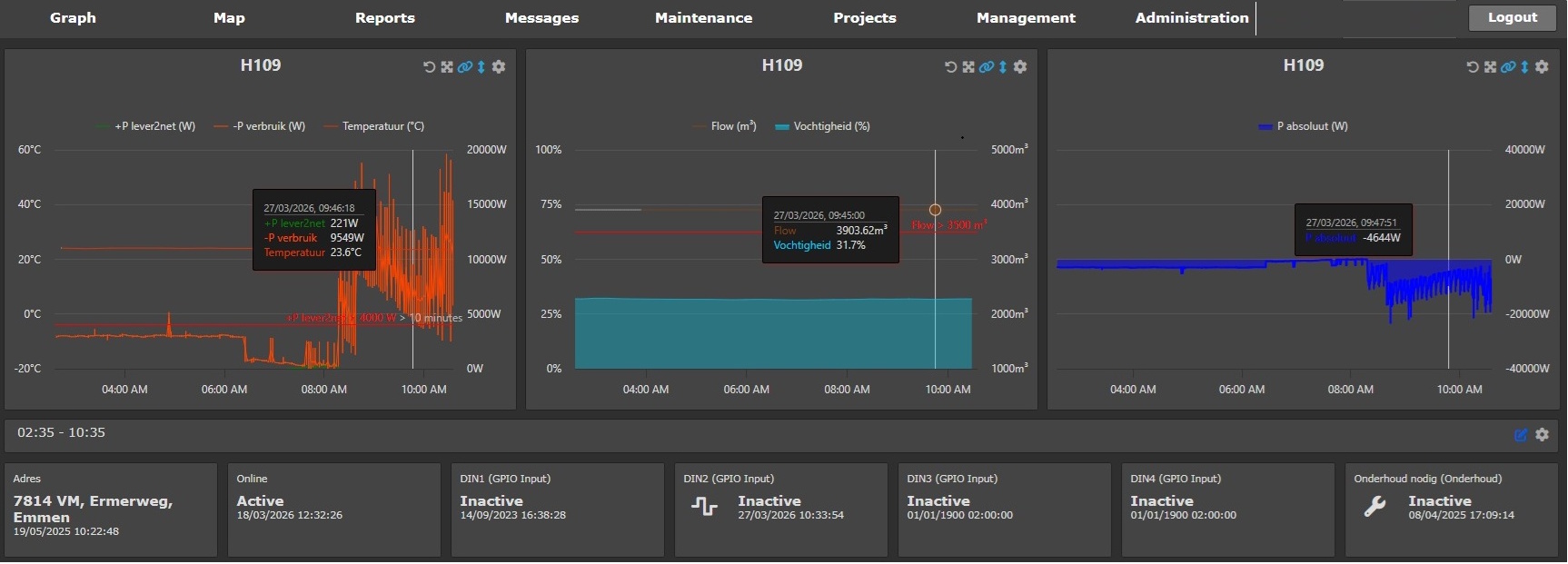
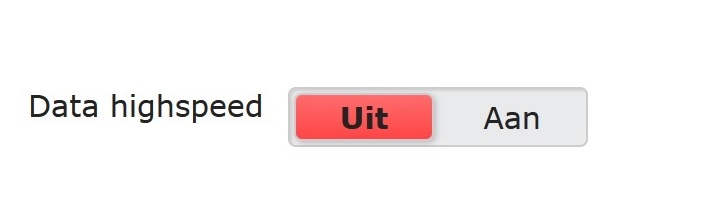
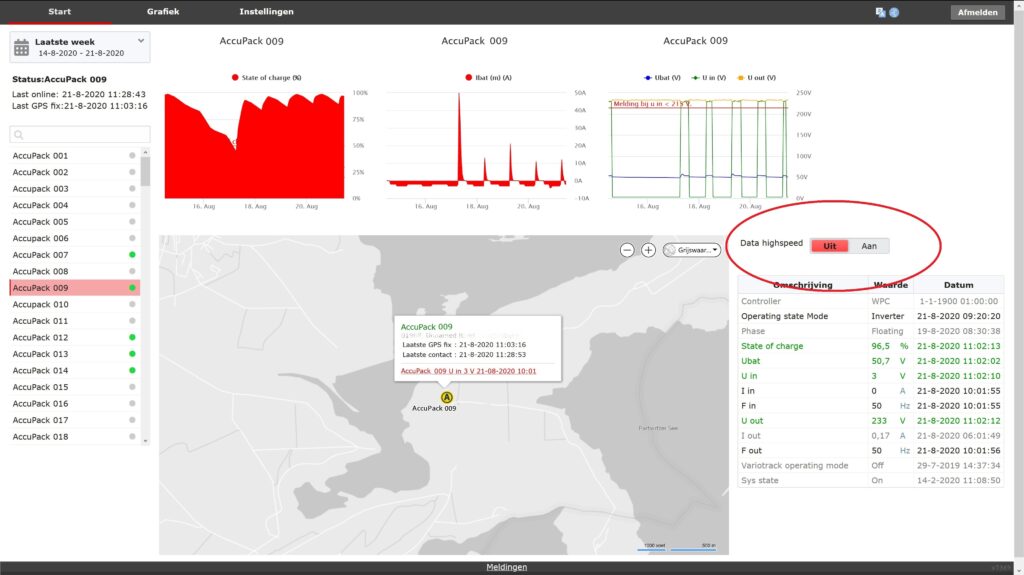
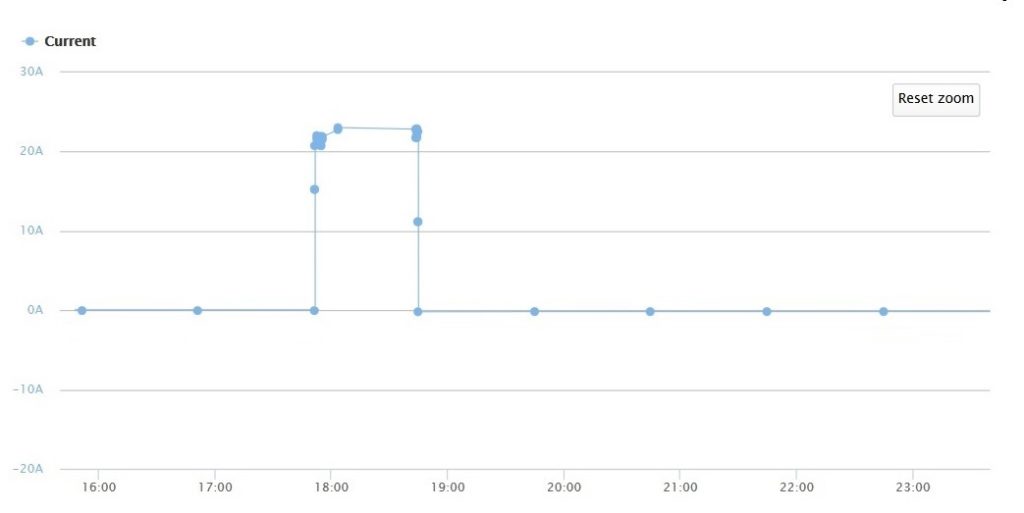
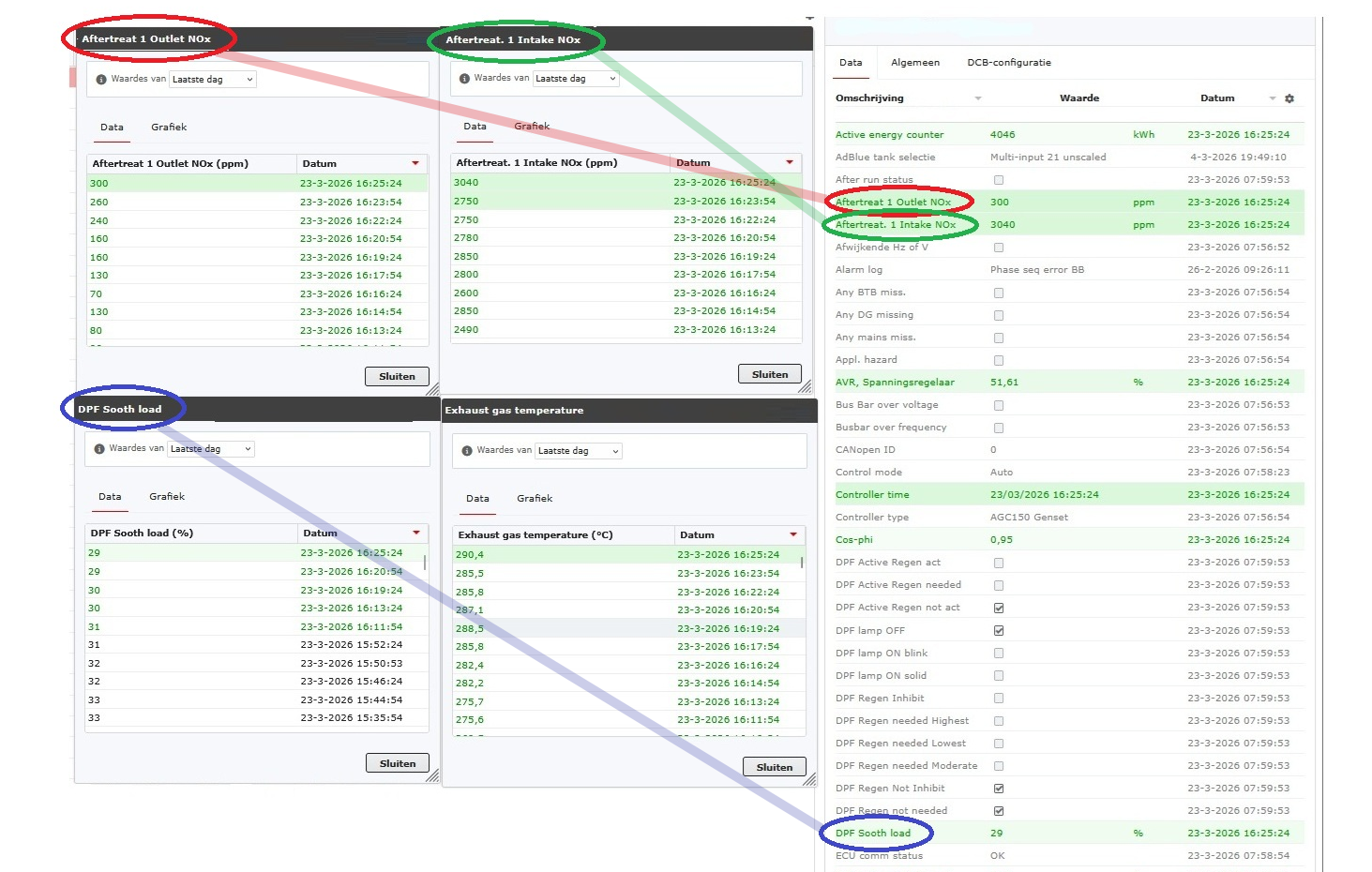
The remote monitoring system offers the option to temporarily increase the data transmission frequency. This allows, for example, a faster identification of the cause of a malfunction or enables analysis of abnormal behavior in a system.
The system provides a “Data High Speed” option for this purpose. When activated, data is transmitted at a high frequency for a pre-set period (for example, 30 minutes). After this period, the system automatically returns to its original settings. If necessary, this option can be activated again.
CO₂ consumption based on engine data
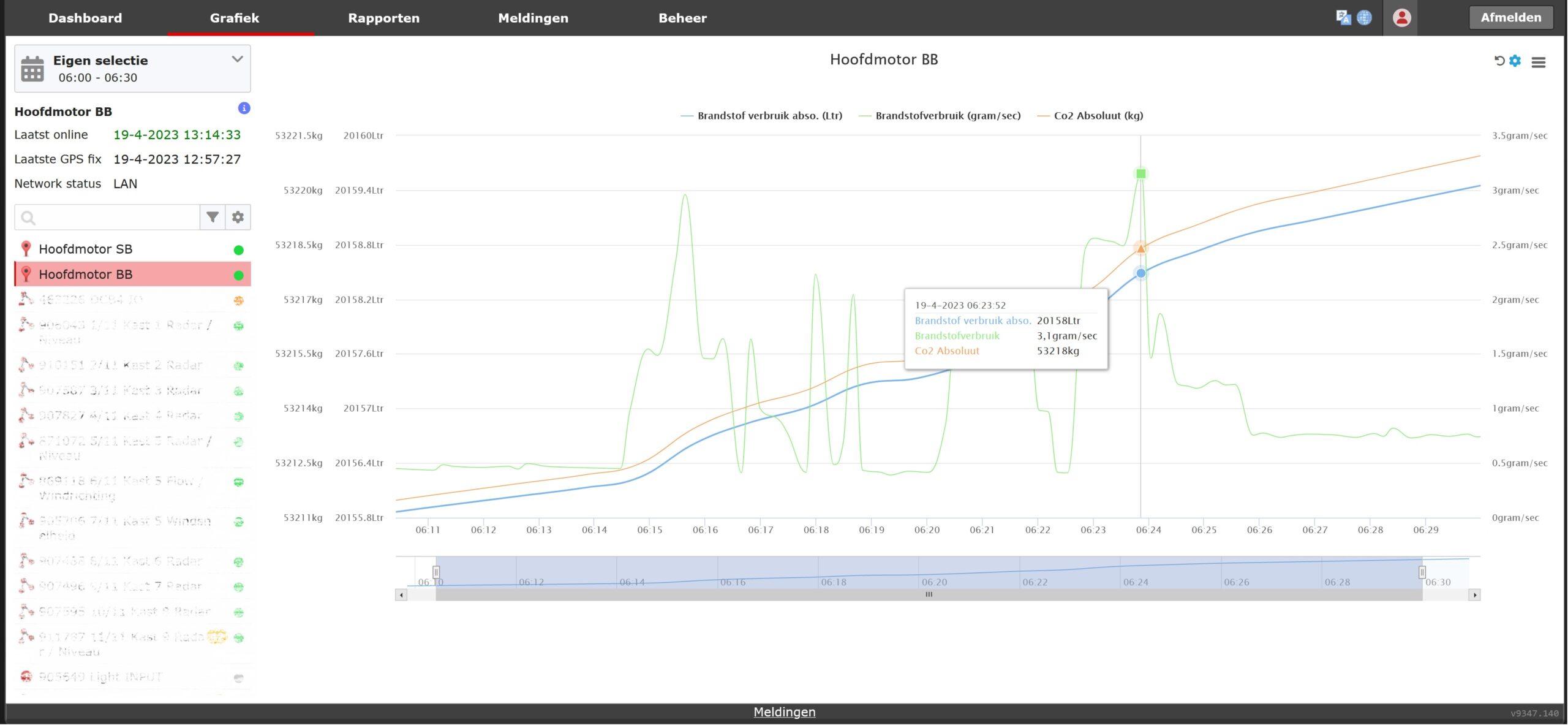
Based on the available engine information, CO₂ consumption can be calculated accurately. This provides insight into the environmental impact of both individual machines and an entire fleet of vehicles or equipment. By linking this data to fuel consumption and the specific emission factors of the engine, the actual CO₂ usage can be easily displayed.
In our system, CO₂ consumption can be presented in several ways:
- **Charts:** By visualizing the data, consumption over time per machine can be easily monitored. Charts highlight trends and help identify opportunities for fuel savings and emission reduction.
- **Reports in Excel or PDF:** For more in-depth analysis and archiving, CO₂ data can be exported to Excel files or PDF reports. This allows further processing and review of the information.
Clear alarm function
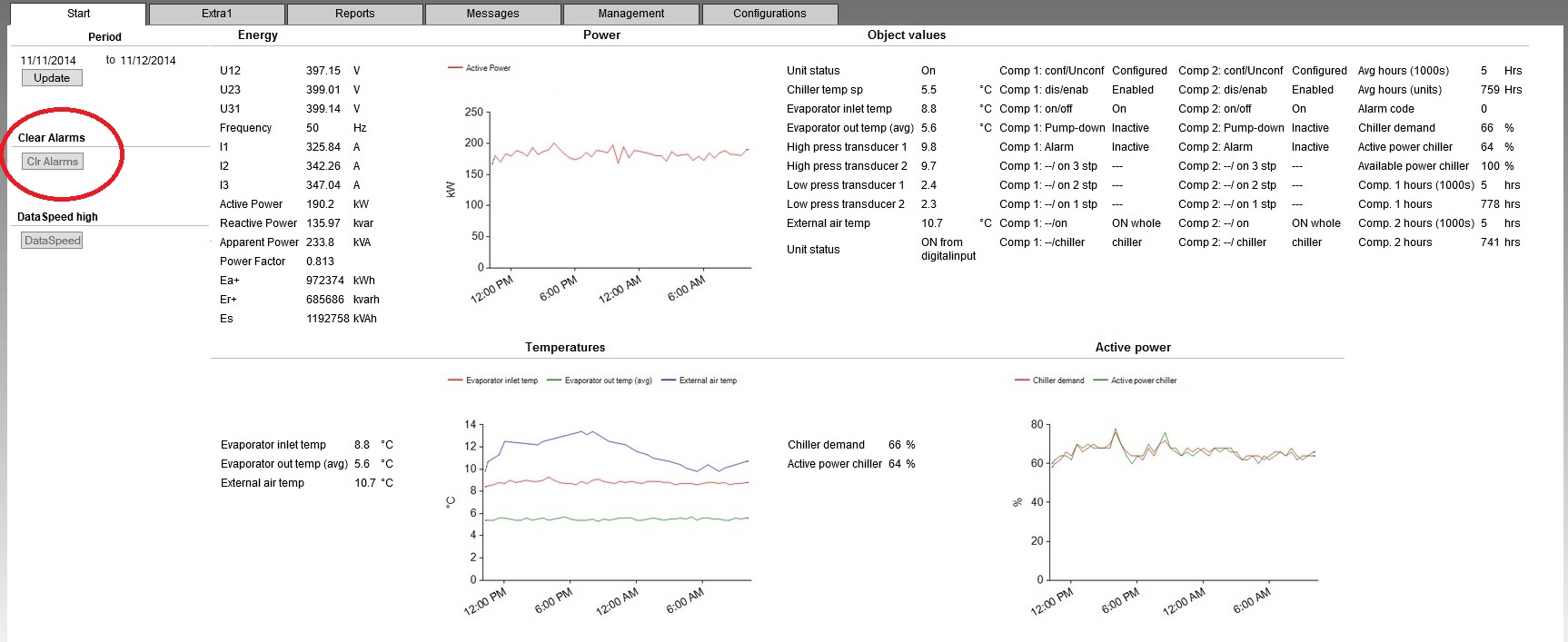
The remote monitoring system provides the option to reset alarms, as long as the controller allows it.
This feature can be useful when the system is no longer functioning optimally due to an alarm.
Time zones
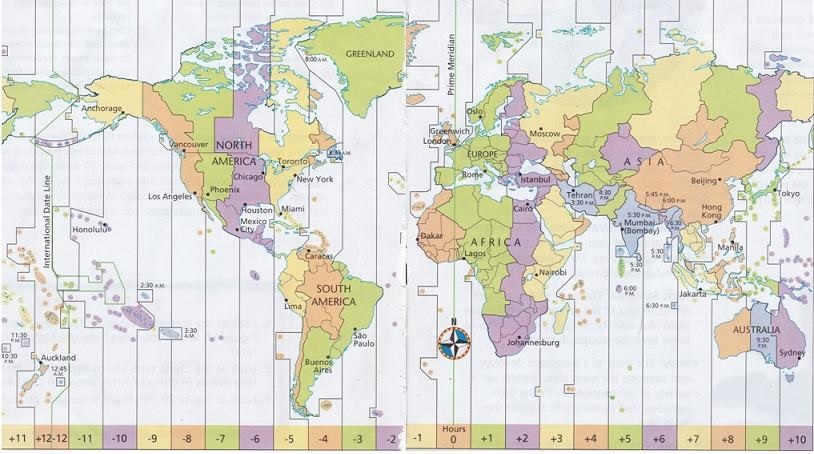
In the web application, a user can set their time zone. All dates and timestamps are automatically converted to the time zone selected by the user. By default, the time zone is set to UTC+01:00 (CET — Central European Time).
By setting the time zone, for example, a rental company in the Netherlands can track a customer’s activities in the UK in the customer’s local time. This prevents confusion about event timings and avoids misunderstandings in communication.
Dynamic filter
Through a combination of smart software and faster hardware, it is now possible to transmit data with high accuracy at minimal additional cost. With a (configurable) frequency of about 2 seconds, data is read. If there is no change in the value of a field or the change falls within a pre-set delta, no data is transmitted. You can set the delta yourself. If there is a change, the information is transmitted immediately. Additionally, the current value is transmitted once per hour as a standard.
API functionality
101 Solutions offers a web service that allows information to be exchanged with third parties using APIs. The format used for data transmission is typically XML or JSON.
In practice, this means that, using the web service, data can be automatically exported from the 101 Solutions system to another system, or imported from another system into the 101 Solutions remote monitoring system.
Private label / branding
The monitoring system can be offered as a private label. The system is customized so that the origin of the remote monitoring cannot be traced. The web application will adopt the “look and feel” of the customer.
The following customizations are implemented:
- The domain name is changed to the customer’s domain name. Currently, it is “customername”.101solutions.nl. This domain name is adjusted to something like remotemonitoring.”customername”.nl or m2m.”customername”.nl. The text before “customername” can be chosen by you.
- The login screen will feature a background selected by the customer (e.g., a photo of your products, your building, or your logo).
- The color scheme and font of the web portal will be adjusted to your company’s branding.
- Your company logo and business details will be placed on the web application.
- For activated alarms sent via SMS and/or email, the sender’s email address will be from your company (e.g., support@customername.nl instead of support@101solutions.nl).
Would you like to learn more about the possibilities of offering the remote monitoring system under your own name to your customers?
Data retention period
All information is retained. This makes it possible to use the remote monitoring system to show how a machine has been operating over time. This information is used to:
- Resolve faults
- Provide clarification regarding the use and warranty of an installation
- Perform data analysis to evaluate the efficiency of machines relative to each other
- Detect fault-prone components and identify over- or underloading
- Support AI applications
The progression of a data point can be displayed over time, for example in the form of a graph. Data is retained for 1 year, with longer retention available upon request. Additionally, it is possible to transfer all data to the customer’s own server.